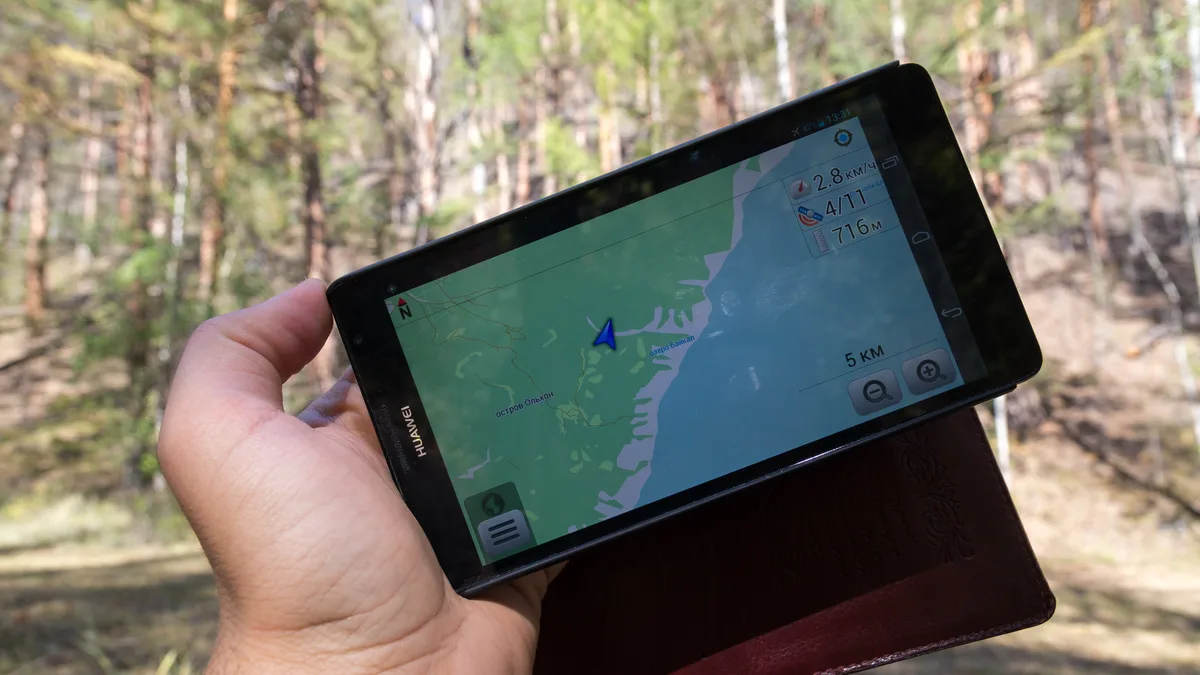
Ontario-regulated sites may offer games only to people physically in Ontario. The AGCO's Standards make operators detect your location, re-check it during play and spot tools that hide it. A failed check means the site could not confirm where you are.
- Registrar's Standards in force since
- April 4, 2022
- Location rule for Ontario gaming sites
- Standard 3.02
- Minimum age to play, Standard 3.01
- 19
- NorthStar penalty portion withdrawn under Standard 3.02
- $10,000 of $30,000
The rule behind the pop-up
Every casino and sportsbook site in Ontario's regulated market works under the Registrar's Standards for Internet Gaming set by the Alcohol and Gaming Commission of Ontario (AGCO). The AGCO says the Standards took effect when the new internet gaming market launched on April 4, 2022. Section 3 of the Standards deals with who may play, and Standard 3.02 is short: games on gaming sites shall be provided only within Ontario.
The reason sits in federal law. Section 207(1)(a) of the Criminal Code lets the government of a province, alone or together with the government of another province, conduct and manage a lottery scheme in that province. Ontario's online market is built on that permission, so a game run by Ontario is meant for people in Ontario. Your residence, your bank and your postal code do not decide whether you may play. Where your device is at the moment of play does.
Standard 3.02 also carries one exception: where a lottery scheme is offered together with another province, people in that province may be allowed on the site. Outside such an arrangement, a player across the river in Gatineau is outside the market, even if the account was opened in Ottawa.
What operators must do, requirement by requirement
The AGCO's eligibility page lists the two requirements under Standard 3.02.
| Requirement | What it says | What you notice |
|---|---|---|
| 3.02, req. 1 | Detect and dynamically monitor the location of a player attempting to play, and block unverified attempts to play | A location check at log-in or before the first bet |
| 3.02, req. 1 (follow-up checks) | Further checks at reasonable intervals set by the operator; longer or shorter periods may be justified by the player's or device's location | Repeat checks during a session, more often for some players than others |
| 3.02, req. 2 | Detect software, programs, virtualization and other programs capable of circumventing player location detection | Blocked play when a VPN, proxy, remote desktop or virtual machine is running |
Two words in the text matter for players. "Dynamically" means the check is not a one-time event at registration. "Intervals determined by the Operator" means the AGCO does not fix one timetable for every site. One operator may re-check you more often than another, and both can be compliant. The Standards also allow the interval to change with where the player or device is, which is why someone sitting near the edge of the province can be asked to confirm location more often than someone in the middle of it.
The age rule sits next door. Standard 3.01 says an individual under 19 years of age cannot play games on a gaming site; the only exception it gives is for 18-year-olds who access a site solely to buy a lottery ticket. A location check is therefore one of several eligibility gates, not the only one.
Why checks fail
The Standards describe outcomes, not technology, so the exact method belongs to each operator and its supplier. From the text alone, a check fails in one of three situations:
- The site cannot confirm where you are. Requirement 1 asks operators to block unverified play attempts. If your browser or app has not been given permission to share location, or the site's location tool is not running, the result is "unverified", and unverified means blocked.
- You are, or appear to be, outside Ontario. The province borders Quebec, Manitoba and several US states. A device close to a border can be read as outside, and a device that really is outside should be blocked.
- Something on the device looks like circumvention. Requirement 2 is about "software, programs, virtualization". A VPN, a proxy, screen-sharing or remote-access software and virtual machines can all fall under that description, even when you use them for work and not to hide your location.
None of these is a judgment about you. A failed check is the operator doing what the Standard requires: refusing play it cannot place inside Ontario.
What happens when a check goes wrong at the operator's end
The AGCO tests whether sites keep players outside Ontario out. In October 2024 it issued penalties of $30,000 in total against NorthStar Gaming (Ontario) Inc. According to iGaming Business, the tests were conducted from physical locations in Quebec and New York state, and NorthStarBets.ca was said to have failed to accurately identify the location of one of the devices.
The story did not end there. In a December 23, 2024 update, the AGCO explained the split: $10,000 was for the alleged failure to keep the site accessible only to players in Ontario, and $20,000 for not responding in a timely manner to the Registrar's repeated requests for information. NorthStar then provided the information, the AGCO confirmed it did not breach Standard 3.02, and the $10,000 portion was withdrawn. The $20,000 stood.
Two lessons follow. The regulator does run border tests from outside the province, so operators have every reason to err on the side of blocking. And a strict check is not a sign of a badly run site; a site that never checks is the one to worry about.
A practical checklist before you play
- Confirm the site is in iGaming Ontario's directory of regulated sites. The directory itself states that players must be physically located in Ontario to play and that the minimum age is 19.
- Give the browser or app location permission when the site asks. Without it, the check cannot verify you, and Requirement 1 says unverified play is blocked.
- Close VPN, proxy and remote-desktop tools before you open the game, not after the error. Requirement 2 makes operators look for them.
- If you live near the Quebec, Manitoba or US border, expect more checks. The Standards allow shorter intervals depending on where the player or device is.
- If you travel, finish open sessions before you leave the province. Play outside Ontario is outside the market, whatever your address.
- If a check keeps failing while you are clearly in Ontario, contact the operator's support first and keep the error message. Disputes with a regulated site go through its complaints process before the AGCO.
Our Ontario casino guide lists sites that operate in the regulated market. If you are based across the river, the Quebec page explains what applies there instead.
This is general information about the published Standards, not legal advice.
Questions readers ask
Why does the site check my location again in the middle of a session?
Standard 3.02 requires operators to dynamically monitor a player's location, with follow-up checks at reasonable intervals the operator sets. One check at log-in is not enough.
Can I play on an Ontario site while visiting Quebec?
Not in the regulated Ontario market. Standard 3.02 says games are provided only within Ontario, with an exception only for lottery schemes offered jointly with another province.
Why is my VPN a problem if I am in Toronto?
Requirement 2 of Standard 3.02 makes operators detect software, programs and virtualization capable of circumventing location detection. The site cannot tell a work VPN from one used to hide location, so it blocks play.
Was NorthStar fined for letting players outside Ontario play?
It was penalized in October 2024, but in December 2024 the AGCO confirmed NorthStar did not breach Standard 3.02 and withdrew that $10,000 portion. The $20,000 for slow responses to the Registrar stood.
Sources
This explainer is general information about Canadian rules, not legal, tax or financial advice. Laws and agency policies change; check the source documents or ask a professional before you rely on them.